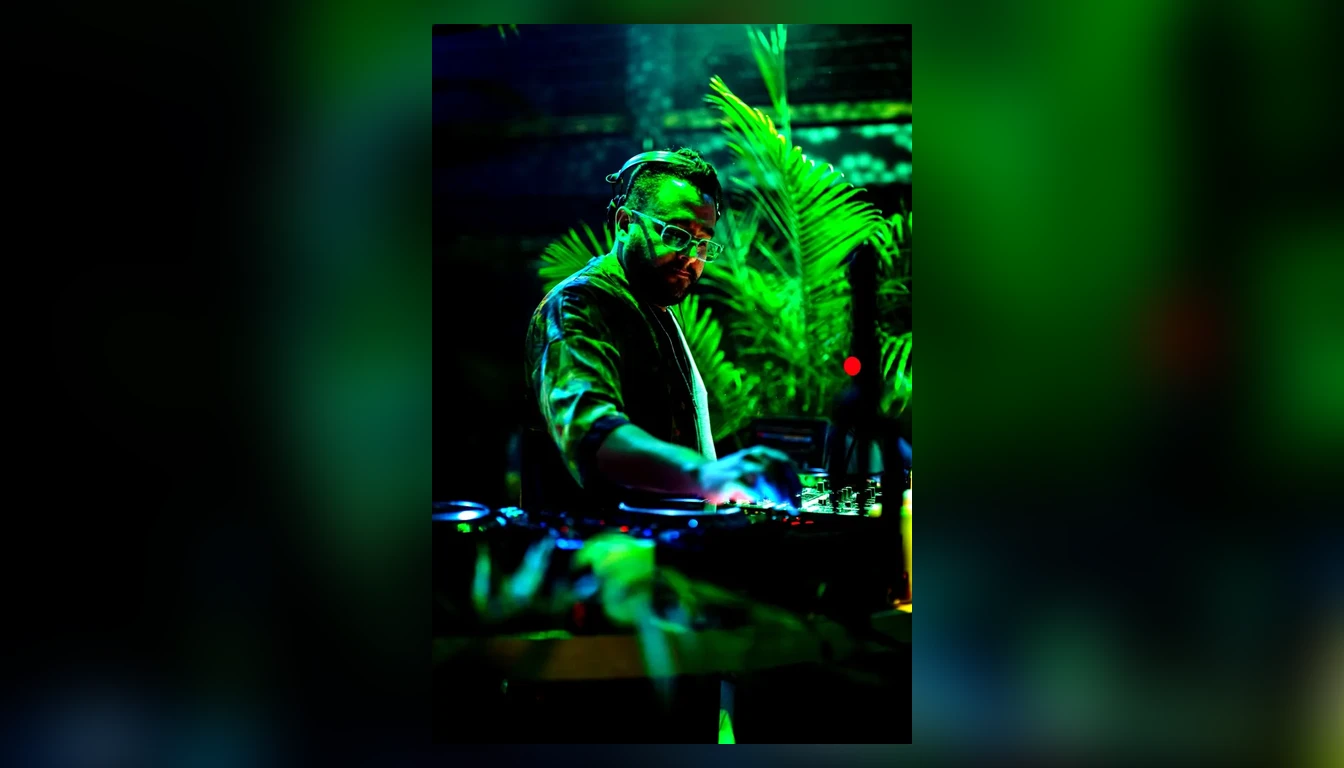
"How do you sign to major labels?"
I get asked this in almost every lesson. And the answer most producers expect — some secret contact, some trick, some shortcut — doesn't exist.
Here's the honest version. I've signed tracks to Sony, Moblack, MTGD, and Godeeva. "Ojos en Tus Ojos" went to Sony Mexico / Orianna. "El Barrio" landed on MTGD and got played by Hugel and Claptone. "Jungle Walk" on Godeeva hit the Beatport Top 10.
None of those happened because I knew someone. They happened because I sent the right track to the right label at the right time — and the track was ready.
The part nobody talks about: rejection
Before any signing, there were rejections. Lots of them.
I sent demos that got no reply. I sent demos that got a polite "not for us right now." I sent demos that I thought were finished but weren't close to label-ready.
That's the process. It's not glamorous. Most producers quit at this stage because they interpret silence as "you're not good enough." It usually means "this specific track doesn't fit our current release schedule."
The difference between a producer who gets signed and one who doesn't isn't usually talent. It's persistence — and the ability to hear what's missing in your own track.
Step 1 — Know what the label actually releases
This sounds obvious. It isn't.
I've seen producers send Tech House demos to Moblack (Afro House label). I've seen Trance tracks sent to MTGD (Afro Latin / Indie Dance). I've seen generic "electronic music" demos sent everywhere.
Labels have a sound. A very specific sound. Before you send anything:
- Listen to the label's last 20 releases. Not 5. Twenty. You need to hear the pattern — the BPM range, the energy level, the vocal treatment, the production style.
- Check which artists they're signing now, not who they signed 3 years ago. Labels evolve. What worked in 2023 might not be what the A&R is looking for in 2026.
- Find the label's Beatport or Spotify page and sort by newest. That's the real picture.
When I was preparing demos for Moblack, I spent weeks studying their catalog. I noticed they favored a specific percussion density, a certain vocal approach (African vocals, usually Swahili or Zulu), and a particular low-end relationship. My demo reflected that — not by copying, but by speaking the same language.
Step 2 — Finish the track before you send it
This is where most demo submissions fail.
Producers send "90% done" tracks thinking the label will hear the potential and sign it. Labels don't sign potential. They sign finished tracks.
"Finished" means:
- The mix translates across monitors, headphones, and phone speakers
- The arrangement is club-ready (intro, build, drop, break, second drop, outro — with DJ-friendly transitions)
- The master is at a competitive loudness without squashing dynamics
- There are no "I'll fix this later" elements left in the project
If your track isn't at a level where you'd play it in a club set yourself, it's not ready for a label. Go back and finish it.
I've sent tracks that I thought were done and later realized they weren't. The honest moment is: would I play this at Pacha right now, in front of 3,000 people? If the answer is "almost" — it's not done.
Step 3 — The demo email itself
Here's what most producers get wrong in the actual submission.
What A&Rs don't want:
- A 500-word bio about your journey as a producer
- "I've been producing for X years and I'm passionate about music"
- Links to 8 different tracks
- A SoundCloud playlist of your entire catalog
- "This track is inspired by [DJ name]" when it clearly isn't
What actually works:
- Subject line: your artist name + track name + genre
- One sentence: who you are and one real credential (if you have one)
- One private SoundCloud or Google Drive link to one track
- WAV or 320kbps MP3
- "Let me know if it fits your roster" — that's it
Here's roughly what my emails looked like when they worked:
Subject: Steven Angel — [Track Name] — Afro House
Hi [A&R name],
Steven Angel here. Released on [previous label if any]. Attached is a new Afro House track — [one line about the track's character].
Private link: [SoundCloud private / Google Drive]
Let me know if it fits.
Steven
Short. Respectful of their time. One track. The music speaks.
Step 4 — Handle the response (or silence)
Three outcomes:
1. No reply (most common). Wait 2-3 weeks. Send one polite follow-up. If still no reply, move on. Don't take it personally — A&Rs get hundreds of demos per week.
2. "Not for us right now." This is useful feedback, even though it doesn't feel like it. It means the quality might be there but the sound doesn't match their current direction. Send a different track in 2-3 months.
3. "We're interested." Now the real conversation starts — contract terms, release timeline, exclusivity, revenue split. This is where most first-time producers need guidance, because the excitement of getting signed can make you agree to terms that aren't in your interest.
What to look for in a label contract
I'm not a lawyer. Get one if the deal is significant. But here are the basics I've learned to watch for:
- Revenue split: 50/50 is standard for most Afro House labels. Some go 60/40 in the artist's favor. Anything less than 50% for the artist — ask why.
- Exclusivity period: How long does the label own exclusive rights? 2-3 years is common. Perpetual exclusivity is a red flag.
- Master ownership: Do you retain your masters? On most indie Afro House labels, yes. On major labels, often no. Know the difference.
- Release timeline: When will they actually release it? I've seen tracks sit for 6+ months. Ask for a timeline in writing.
The shortcut that isn't a shortcut
If your track isn't getting signed, the issue is almost always the track — not the submission process.
The submission process is simple. The hard part is making a track that genuinely competes with what labels are already releasing.
Here's what I'd suggest if you're stuck:
-
Get your mix professionally checked. Sometimes you can't hear what's wrong because you've been listening for 200 hours. A second set of ears that knows the genre can identify the gap in 15 minutes.
-
Study a signed track from the inside. Open a professionally-built template in Ableton. Look at the bus structure, the chain order, the arrangement. Compare it to your project file. The differences will be specific and fixable.
-
Work with a mentor who's been signed to the labels you're targeting. Not a generic YouTube tutorial — someone who's navigated the actual process with the actual labels you want.
Ready to get your track label-ready?
I offer 1:1 mentorship for producers aiming to sign their first (or next) track to a major Afro House label. Same ears that signed to Sony, Moblack, MTGD, and Godeeva.
| Option | Price | What you get |
|---|---|---|
| 1:1 Lesson | $80/hr | Live screen share — I listen to your track and tell you exactly what's between you and a label signing |
| Mix Audit | $50 | Detailed notes on what's pulling your mix away from label-ready |
| Full Mix + Master | $150-250 | I take your stems and bring it to release-ready quality |
→ Book a lesson or send me your track on WhatsApp.
FAQ
How long does it take to get signed to an Afro House label?
There's no fixed timeline. My first signing took months of demos and rejections. Some producers get signed on their third track, others on their thirtieth. The variable isn't talent — it's whether the track fits what the label is releasing right now.
Do I need connections to get signed to a label like Moblack or MTGD?
No. I had zero industry connections when I sent my first demos. Labels have public demo submission emails. What matters is the track quality, the genre fit, and the timing. A connection might get your email opened faster, but it won't get a weak track signed.
Should I pay for a label to release my track?
No. Legitimate labels don't charge artists for releases. If a label asks for money upfront, it's a vanity label — they make money from artists, not from music. A real label earns from the release itself and shares revenue with you.
Steven Angel — Afro House / Afro Latin / Indie Dance producer and DJ. Released on Sony, Moblack, MTGD, Godeeva. Beatport Top 10 — Jungle Walk and Ojos en Tus Ojos. 100M+ streams.
FAQ
Want me to teach you this 1-on-1?
1-on-1 Ableton lessons by a Moblack & MTGD artist. From $30 intro session.
Book a lesson →